As short as possible.
Okay, being less facetious there are a number of reasons for using very short stories
- the shorter your story the more you can tell — it seems obvious but remember that any example you give won’t work for everyone. As that’s the case two twenty second stories, instead of one 40 second story means you’ve got another chance to capture the people you missed the first time.
- it’s a great discipline — if you allow yourself two minutes for a story there’s a depressingly high chance that you’ll accidentally include “bloat”. Bloat is stuff that doesn’t need to be there, such as whether it was a Thursday or a Tuesday, 35 years ago. And audiences try to process everything, so if you give them bloat, some of their mind is spent on processing the bloat, not the important stuff
- you know and I know that stories are important but sometimes audiences don’t — they feel like a story is a diversion from the main thrust and drive of the presentation. Even though it’s working, they resent it. The shorter your diversion, the less they resent it.
So short stories please. If in doubt, check out “The seductive details effect” and Cognitive Load Theory.

What’s the minimum length for a story in a business setting?
Good question, because if we do things too briefly or too slickly no one notices them and they don’t have time to sink in. For example, I do a lot of training for local government staff on better presenting and if all I did was give them the “here is what you need to know” I could give the course in under three hours… and nothing would stick past the lunch break.
Instead, the course lasts a day, at a slightly slower pace, because people can only absorb things so fast.
At a minimum a story (entertainment or business storytelling) has to have three chronological elements:
- the starting point — there’s an implicit assumption that this old status quo contains a problem and needs to be fixed. You can imply a lot with very few words!
- the action — this is the thing that happened and triggered a change. In a business storytelling setting this is often an example of what you’re encouraging (or discouraging!)
- the consequence — like the starting point, this can be largely implied
That’s it, crudely speaking. By the way, it’s remarkably similar to the structure for a good joke! If your story needs more, take a long hard look at how suitable it is. How about these for examples?
- My wife and I were watching Netflix last night. We got a message from our son-in-law asking if we’d log off so that he could watch something. I wouldn’t have minded except he was only in the kitchen! (See how the consequence of me being annoyed here is an implication, not stated outright for the sake of humour)
- Once upon a time Blockbuster ruled supreme in terms of video rental with stores everywhere do that you could turn up, and hire a physical copy of a movie to watch. Streaming arrived with companies like Netflix leaving Blockbuster in the dust — and Blockbuster didn’t adapt! Now? No more Blockbuster stores pretty much anywhere…
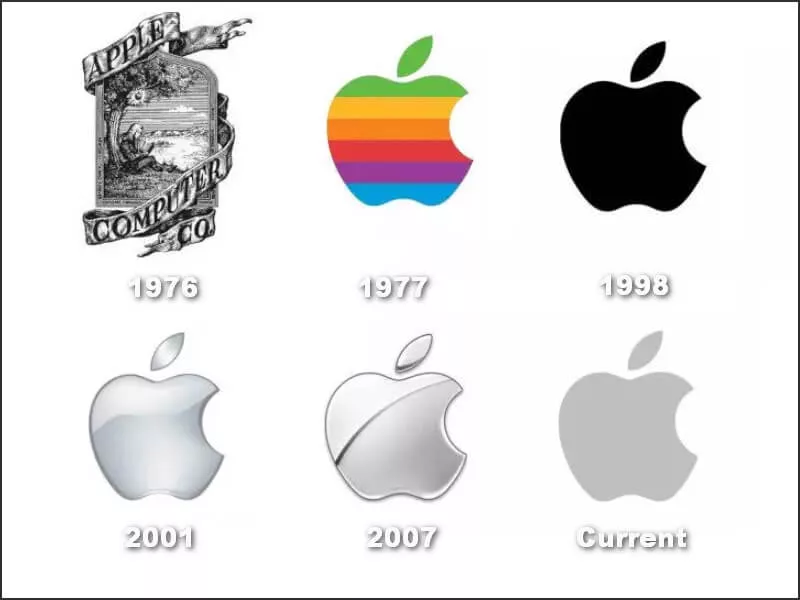
- Somewhere around the end of the 1990s Apple was in trouble and facing bankruptcy. Hard to imagine now-a-days, as Apple is one of the biggest company in the world with a value of about four and a half trillion dollars. (Here’s the change bit…)To handle the terrible company troubles Steve Jobs had an almost brutal approach to changing the company but one of the key things the company did was to go with the “Think different’ marketing campaign. (…and here’s the consequence.) Apple was no longer a computer, it was a lifestyle choice and lots of people bought into it. Loooots of people.
In the first two examples, there’s no bloat at all… the last one has a tiny bit — where it talks about the four and a half trillion dollars information near the start. We could cut from “Hard to imagine…”
Obviously you probably want to add details to give the story some depth or flavour, but the core is the core. If you cut too much detail you have something so bereft of emotional content that it’s not really a story any more. The point of business storytelling is to use stories to be emotional (as well as all the other stuff…)
How much detail should you add?

The TL;DR version is this: as few details as you need to keep it interesting.
The playwrite Checkov famously gave this advice to aspiring playwrights: If in the first act you have hung a pistol on the wall, then in the following one it should be fired. Otherwise don’t put it there.
There are no rules that I’ve ever discovered (feel free to draw my attention to any research you know about!) but a decent rule-of-thumb is this. Stop with the details when they’re not load-bearing for the message… they actively hurt when they’re merely interesting even if they’re true.
Hemmingway is widely regarded as “the” greatest storyteller of all time and he had a simple rule: the story you tell should have only 1/7th of the details you know. I know that’s a craft aphorism from a specific writer but he’s a hell of a writer!
Speaking of how great writers do it, Vonnegut’s fourth rule is pretty brutal: Every sentence must do one of two things — reveal character or advance the action. Given how short things should be for business storytelling revealing character is a big ask, so let’s just say “every sentence should advance the action” and see how we get on.
The bottom line for a business story?
As short as you can, as quick as you can without losing the point of the story — a human element.
Pingback:Hero Story in Business Storytelling: Busting the Myth - StoryMaking